Sleep Calculator
Waking up groggy even after a full night in bed usually isn’t about how long you slept, it’s about when you woke up. Sleep happens in roughly 90-minute cycles, and waking in the middle of a deep-sleep phase is what leaves you reaching for the snooze button.
This free sleep calculator works backward from the time you need to wake up (or forward from when you go to bed) to find bedtimes and alarm times that land between cycles, so you wake up at the lightest point of sleep, feeling rested. No sign-up, no app to install.
Sleep Time Calculator
Calculate the best time to sleep or wake up based on 90-minute sleep cycles
💡 Tip: The average person takes 15 minutes to fall asleep. We’ll factor this into your bedtime recommendations.
Your Sleep Results
Sleep Health Tips
- Maintain a consistent sleep schedule, even on weekends
- Avoid caffeine and heavy meals close to bedtime
- Create a relaxing bedtime routine to signal your body it’s time to sleep
- Keep your bedroom cool, dark, and quiet for optimal sleep
- Limit screen time at least 1 hour before bed
Sleep occurs in 90-minute cycles. Waking up between cycles helps you feel more refreshed and alert. Most adults need 5-6 complete cycles for optimal rest.
How to Use the Sleep Calculator
- Pick your mode: “I want to wake up at…” or “I want to go to bed at…”.
- Enter your time with the time picker.
- Get results: bedtime/wake-up options a full number of 90-minute cycles apart — typically 6, 5, or 4 cycles (9, 7.5, or 6 hours).
- The results already include ~15 minutes to fall asleep — be in bed, lights out, at the shown time.
Why Waking Up at the Right Time Matters
Sleep runs in roughly 90-minute cycles, moving through light sleep (N1, N2), deep sleep (N3), then REM sleep before the cycle repeats.
If your alarm drags you out of deep N3 sleep or the middle of a REM phase, you get sleep inertia — that heavy, disoriented grogginess that can linger for 30 minutes or more.
Wake up between cycles, during light sleep, and the transition feels natural. If you want the full science, our guide to sleep cycles and the four stages of sleep walks through what happens in each phase.
How Much Sleep Do You Actually Need?
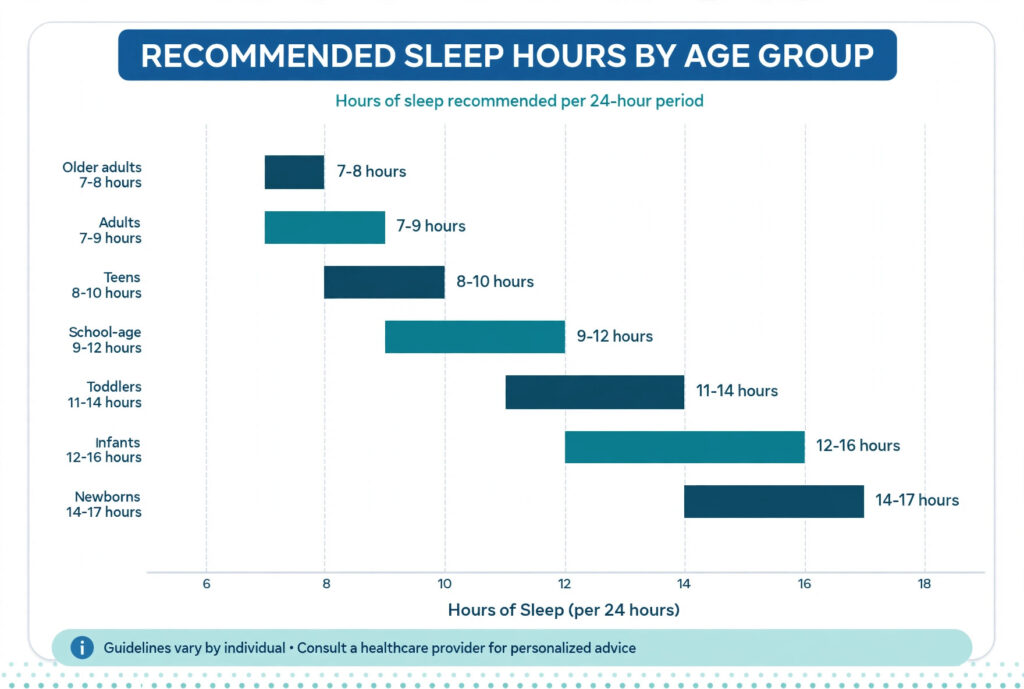
The right amount varies by age. The widely cited guidelines:
- Adults (18-64): 7-9 hours
- Older adults (65+): 7-8 hours
- Teenagers (14-17): 8-10 hours
- School-age children (6-13): 9-11 hours
For most adults, the 6-cycle (9-hour) and 5-cycle (7.5-hour) options are the sweet spots.
5 Proven Tips for Better Sleep
- Keep a consistent schedule, even weekends.
- Get morning daylight within an hour of waking.
- Cut caffeine by early afternoon (5-6 hour half-life).
- Wind down screens 30-60 min before bed.
- Keep the room cool (~18C/65F), dark, and quiet.
Sleep Calculator FAQs
Does the 90-minute sleep cycle rule really work?
It’s a useful average, not a law. Real cycles run 80-120 minutes, but planning in roughly 90-minute blocks beats picking a random bedtime.
Why do I wake up tired after 8 hours of sleep?
You probably woke mid-cycle. Poor sleep quality — fragmented sleep, apnea, alcohol — or a schedule fighting your chronotype are other culprits. Fixing the timing is the easiest first step.
Is 6 hours of sleep enough?
For most adults, no. Four cycles is survival mode, not optimal. Aim for 5 cycles (7.5 hours) as your baseline.
Should I count the time it takes to fall asleep?
Yes — and the calculator already includes about 15 minutes of wind-down time in its suggestions.
Are naps a good idea?
Short 10-20 minute naps or a full 90 minutes both work. The 30-60 minute zone is the danger area — you’ll likely wake from deep sleep.
Does this work for shift workers?
The cycle math works at any hour. Anchor one consistent sleep block and manage light exposure to protect it.
Is this calculator a substitute for medical advice?
No. If you snore loudly, gasp awake, or feel exhausted despite adequate sleep, see a doctor.
About This Tool
SleepingTimeCalculator.net is a free tool built to make sleep science practical: well-established research on 90-minute sleep cycles turned into bedtimes you can use tonight. The calculator runs entirely in your browser — nothing you enter is stored or sent anywhere.
We’re expanding into a full sleep resource with in-depth, sourced guides published daily in our sleep blog.